
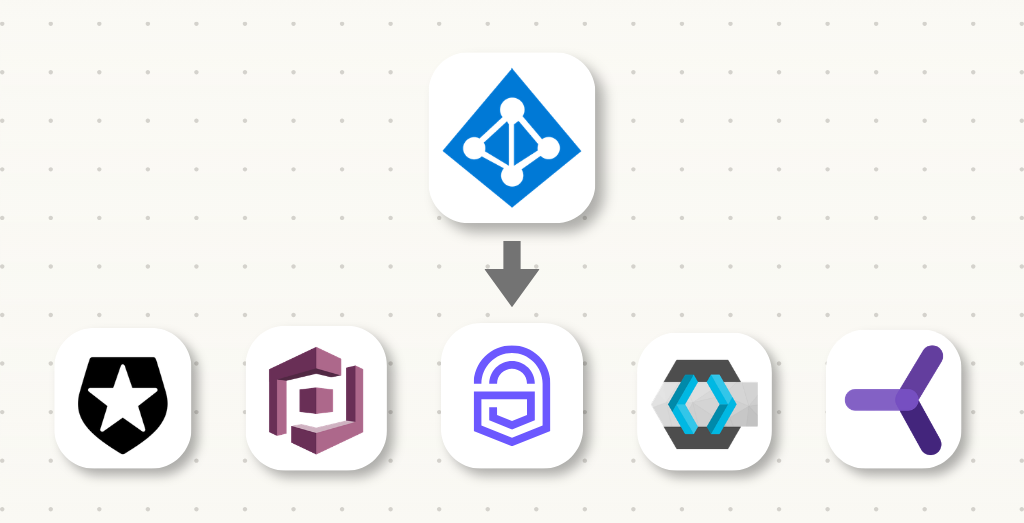
Microsoft is phasing out Azure AD B2C, leaving many businesses reconsidering their customer identity and authentication strategy. And with risk-based authentication capabilities already being retired, the impact is becoming more immediate. But before you start planning a full migration, there's good news: you have options.
As of May 1, 2025, Azure AD B2C is no longer available for new customers to purchase. Microsoft has also retired Premium P2 licensing, removing Identity Protection capabilities and the ability to use risk-based Conditional Access policies. Existing customers can continue using Azure AD B2C, with support committed until at least May 2030.
For businesses currently using Azure AD B2C, this creates an opportunity to rethink how authentication is managed. But moving to a new identity provider doesn't necessarily need to be your first step.
Some solutions let you step-up authentication on top of your existing infrastructure, while others offer a complete customer identity and access management (CIAM) replacement.
Here are five Azure AD B2C alternatives worth considering in 2026.
1. Authsignal
Best for: Adding step-up, risk-based authentication and orchestration without migrating off Azure AD B2C
Authsignal is an Authentication as a Service provider that adds a flexible authentication and orchestration layer on top of existing identity infrastructure, including Azure AD B2C.
For businesses navigating Microsoft's changing roadmap, this means you don't need to rush into a full identity provider migration to start improving authentication.
Authsignal connects to your existing Azure AD B2C tenant through OIDC custom policies, allowing your user directory, sessions, and existing policies to remain in place while introducing new authentication capabilities.
The platform brings together a clear path to passwordless, passkeys, SMS and email OTP, biometrics, adaptive MFA, risk-based authentication, and digital credential verification, with visual no-code orchestration for managing authentication journeys.
Rather than applying the same authentication requirements to every customer, businesses can use contextual signals to adapt verification based on risk. For example, customers signing in from a familiar device can experience a faster journey, while higher-risk transactions can trigger additional verification.
Authsignal also supports authentication and verification across web, mobile, contact center, and in-person channels, helping businesses deliver more consistent customer experiences.
Because Authsignal operates independently of the underlying identity provider, businesses can introduce modern authentication capabilities today while retaining flexibility to evaluate their longer-term identity strategy.
Consider Authsignal if: you're currently using Azure AD B2C and want to introduce risk-based authentication, and reduce friction without making an immediate user migration your first priority.
2. Auth0
Best for: Developer-focused customer identity and authentication
Auth0 is a customer identity platform that provides authentication, authorization, and user management capabilities for web and mobile applications.
It supports a range of authentication methods, including passwords, passkeys, social login, passwordless authentication, and MFA.
Auth0 offers hosted and embedded login experiences, along with APIs and SDKs that give developers flexibility when building authentication into applications.
Its adaptive MFA capabilities also allow businesses to introduce additional verification based on risk and context.
For organizations considering a move away from Azure AD B2C, Auth0 offers a broader CIAM environment for managing customer identities and authentication together.
However, replacing Azure AD B2C with Auth0 involves evaluating how existing users, application integrations, and authentication policies will transition to the new platform.
Consider Auth0 if: you're looking for a full CIAM solution with developer-focused authentication, user management, and customization capabilities.
3. Amazon Cognito
Best for: Customer identity management within AWS infrastructure
Amazon Cognito is AWS's customer identity and access management service, designed to support user registration, authentication, and access to applications.
It provides managed user directories, authentication APIs, and hosted login experiences, making it a relevant option for businesses building applications within the AWS ecosystem.
Amazon Cognito supports passwords, passkeys, SMS and email OTP, MFA, and federation with external identity providers through standards such as SAML and OpenID Connect.
It also supports customizable authentication flows and integrations with other AWS services.
For organizations already running significant infrastructure on AWS, Cognito can provide a way to consolidate customer identity management within their existing cloud environment.
However, moving from Azure AD B2C to Cognito requires planning for user migration, application changes, and the configuration of authentication journeys.
Consider Amazon Cognito if: your applications are built primarily on AWS and you're looking for a managed customer identity solution that integrates with your cloud infrastructure.
4. Keycloak
Best for: Open-source identity and access management
Keycloak is an open-source identity and access management platform that provides authentication, authorization, and user management capabilities for applications and services.
It supports standards including OpenID Connect, OAuth 2.0, and SAML, making it a flexible option for businesses looking to manage customer identity infrastructure with greater control over deployment and configuration.
Keycloak includes capabilities such as single sign-on, identity federation, user management, and MFA, alongside configurable authentication flows.
Its open-source approach gives organizations the flexibility to customize identity management to their requirements, although self-managed deployments also introduce responsibilities for maintenance, hosting, and ongoing updates.
For businesses moving away from Azure AD B2C, Keycloak can be an option for teams with the technical resources to operate and customize their own identity infrastructure.
Consider Keycloak if: you want an open-source identity platform with control over hosting, configuration, and customization, and have the resources to manage the infrastructure.
5. Duende IdentityServer
Best for: Customizable identity and access management for .NET applications
Duende IdentityServer is an identity and access management framework built for .NET and ASP.NET Core applications, providing authentication, authorization, and token management capabilities.
It supports industry standards including OpenID Connect, OAuth 2.0, and SAML, making it a flexible option for businesses looking to build and manage their own identity infrastructure.
Duende IdentityServer provides capabilities such as single sign-on, identity federation, session management, and customizable authentication workflows. Its extensible architecture allows organizations to integrate existing user databases, configure authentication requirements, and tailor identity experiences to their applications.
For organizations moving away from Azure AD B2C, Duende IdentityServer offers greater control over how identity and authentication are implemented, particularly for businesses with established .NET development environments.
However, transitioning to IdentityServer requires planning for user migration, application integration, and ongoing infrastructure management. Organizations will also need the technical resources to configure and maintain their identity environment.
Consider Duende IdentityServer if: you're looking for a customizable identity framework that gives your development team greater control over authentication, authorization, and identity infrastructure.
Which Azure AD B2C alternative should you choose?
The right solution depends on what you're trying to achieve and how quickly you need to make changes.
Auth0, Amazon Cognito, Keycloak, and Duende IdentityServer offer identity management capabilities for businesses considering a move to a new IdP.
But if your immediate priority is improving authentication security, reducing customer friction, or introducing more flexible verification methods, a full migration may not be necessary just yet.
This is where Authsignal offers a different approach.
Rather than replacing Azure AD B2C, Authsignal adds an independent authentication layer on top of your existing infrastructure. Businesses can introduce passkeys, OTP, biometrics, and risk-based authentication, while using no-code orchestration to manage verification across customer journeys.
upgrade your authentication with Authsignal today, and keep your options open for tomorrow. With existing integrations for Auth0, Amazon Cognito, Keycloak, and Duende IdentityServer , you can move to a new IdP when you're ready, without starting from scratch on authentication.
Azure AD B2C's roadmap may be changing, but you have time to evaluate your options and improve the customer experience in the meantime.
Considering your next move from Azure AD B2C?
Discover how Authsignal helps you modernize authentication without an immediate migration, while keeping your options open for the future.