.avif)
Passwords have long been the backbone of digital security, but their ever-increasing flaws are hard to ignore. They get stolen, reused, forgotten, and they put way too much pressure on users to stay secure.
Passkeys, on the other hand, change the game. Instead of just trying to make passwords safer, they get rid of them altogether. By using biometrics and public-key cryptography, passkeys make logging in both more secure and way easier.
Let’s understand why passkeys matter, how they function on a technical level, and what makes them effective for modern security needs.
What are passkeys?
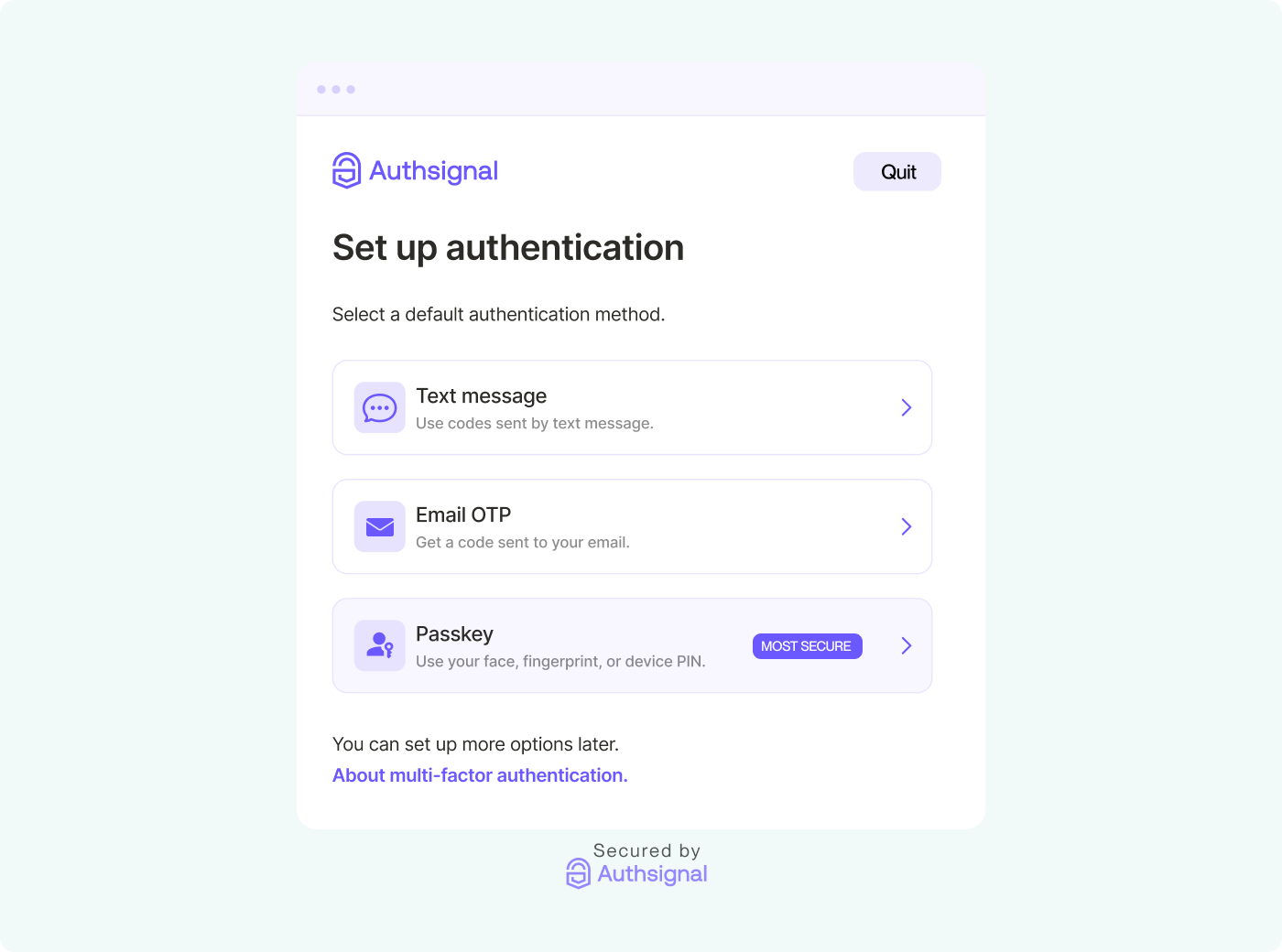
Unlike passwords that need to be remembered and typed, passkeys use the biometrics or PIN already used to unlock phones or laptops. Passkeys are basically digital keys that live on your devices.
When companies like Apple talk about passkeys, they often skip the technical details. But for developers and security professionals, understanding what's happening under the hood is essential.
Passkeys are built on the FIDO2 and WebAuthn standards that use public-key cryptography. After implementing this technology through Authsignal for multiple clients, it becomes clear that the technical implementation is surprisingly straightforward despite the robust security it provides.