Contact salesSign inSign up
AuthsignalAuthsignal
Product
Passwordless / multi-factor authentication (MFA)
Drop-in authentication
Passkeys
Biometric authentication
Risk-based authentication
WhatsApp OTP
Authenticator apps (TOTP)
App verification
Push authenticationQR code verificationIn-app verification
SMS OTP
Email OTP
Magic links
See all authenticators
See less authenticators
Palm biometrics
Contactless payments & identity verification
Flexible integration modes
Pre-built UI
Low code
UI components
Customizable
Custom UI
Flexible
Digital credentials API Beta
Authenticate customers instantly using digital credentials
Session management
Keep users signed in across web and mobile after authentication
Fraud Controls
Rules and policies engine
Step-up authentication
No-code rule creation
Risk alerts
User observability
Audit trails
Dynamic linking
Why Authsignal?
Complete authentication infrastructure from enrollment to step-up auth, modular by design
Solutions
By USE CASE
View All
Account takeovers (ATO)
Go passwordless
Call center
SMS cost optimization
Existing apps
QR code payments
Step-up MFA
Palm biometrics payments
By INDUSTRY
View All
Financial services
Marketplace
e-Commerce
FinTech
Crypto
Healthcare
By Integration (identity provider)
Amazon Cognito
Azure AD B2C
Duende IdentityServer
Keycloak
Auth0
NextAuth.js
Custom identity provider
By ROLe
Engineers
Product
Passwordless / Multi-factor Authentication (MFA)
Flexible Integration Modes
Pre-built UI · Low code
UI Components · Customizable
Custom UI · Flexible
Digital credentials API Beta
Authenticate customers instantly using digital credentials
Session management
Issue JWT access and refresh tokens
Why Authsignal?
Plug in Authsignal to elevate your IDP — effortless integration with any architecture.
Drop-in Authentication
Passkeys
Biometric authentication
WhatsApp OTP
Risk-based authentication
SMS OTP
Email OTP
Magic links
Authenticator apps (TOTP)
Push notifications
App verification
Push authenticationQR code verificationIn-app verification
Palm Biometrics
Contactless payments & identity verification
Fraud Controls
Rules and Policies Engine
Step-up Authentication
No Code Rule Creation
Risk Alerts
User Observability
Audit Trails
Use Cases
Financial services
Account takeovers (ATO)
Marketplace
Go passwordless
e-Commerce
Solutions
By Use Case
Account takeovers (ATO)
Go passwordless
Call center
SMS cost optimization
Existing apps
QR code payments
Step-up MFA
Palm Biometric Payments
View all Use Cases
By Industry
Financial services
Marketplace
e-Commerce
FinTech
Crypto
Healthcare
View all Industries
By Integration (identity provider)
Amazon Cognito
Azure AD B2C
Duende IdentityServer
Keycloak
Auth0
NextAuth.js
Custom identity provider
By Role
Engineers
PricingAboutDocsBlog
Schedule a call
Try Authsignal
AUS Flag

Authsignal secures millions of passkey transactions out of our hosted Sydney region.

AUS Flag

Authsignal secures millions of passkey transactions out of our hosted Sydney region.

Join us today!
Right icon
Blog
/
Current article
Chainalysis
Crypto
No-code rules engine

Automating Chainalysis Workflows: How To Integrate Chainalysis KYT With AuthsignaI To Mitigate Crypto Crime And Streamline Operations

Ashutosh Bhadauriya
⬤
September 16, 2025
Share
Automating Chainalysis Workflows: How to Integrate Chainalysis KYT with AuthsignaI to Mitigate Crypto Crime and Streamline Operations

Chainalysis is a blockchain analytics platform that provides critical intelligence and compliance solutions for cryptocurrency transactions. At its core, Chainalysis specializes in tracking blockchain transactions, identifying suspicious activities, and providing risk assessment through its Know Your Transaction (KYT) service. This enables organizations to screen cryptocurrency transactions in real time, ensuring compliance with regulatory requirements while preventing fraud and other illicit activities.

Chainalysis KYT assigns risk scores for each User ID, with ratings that range from LOW, MEDIUM, HIGH, to SEVERE. This simple system helps you quickly understand how risky a transaction might be and respond accordingly.

‍

How Authsignal Enhances your Chainalysis KYT workflow

Chainalysis is great at spotting risky transactions, but identifying risk is only half the solution. With Authsignal, you can immediately act on those risk alerts, such as requesting extra verification when something looks suspicious.

Authsignal’s integration connects Chainalysis's risk detection directly to Authsignal actions, creating a streamlined single API call to manage both security and crypto crime risk. On-top of that you’re able to orchestrate outcomes like challenge flows including re-KYC if the transaction meets your rules managed policies.

‍

What you get:

  1. Instant response: When Chainalysis identifies suspicious activity, you can immediately trigger additional verification with Authsignal.
  2. No coding needed: Visual editor makes it simple to set up security rules without development resources.
  3. Smart authentication: Apply appropriate verification methods like biometrics, passkeys, TOTP based on the actual risk level of each transaction.
  4. Re-KYC: Need to re-KYC the customer Authsignal provides biometrics re-authentication that can match the customer back to the original ID verified photograph.
  5. Proactive protection: Identify and stop suspicious activity before funds transfer, rather than dealing with fraud after the fact.

‍

Setting It Up

Getting started is straightforward:

‍

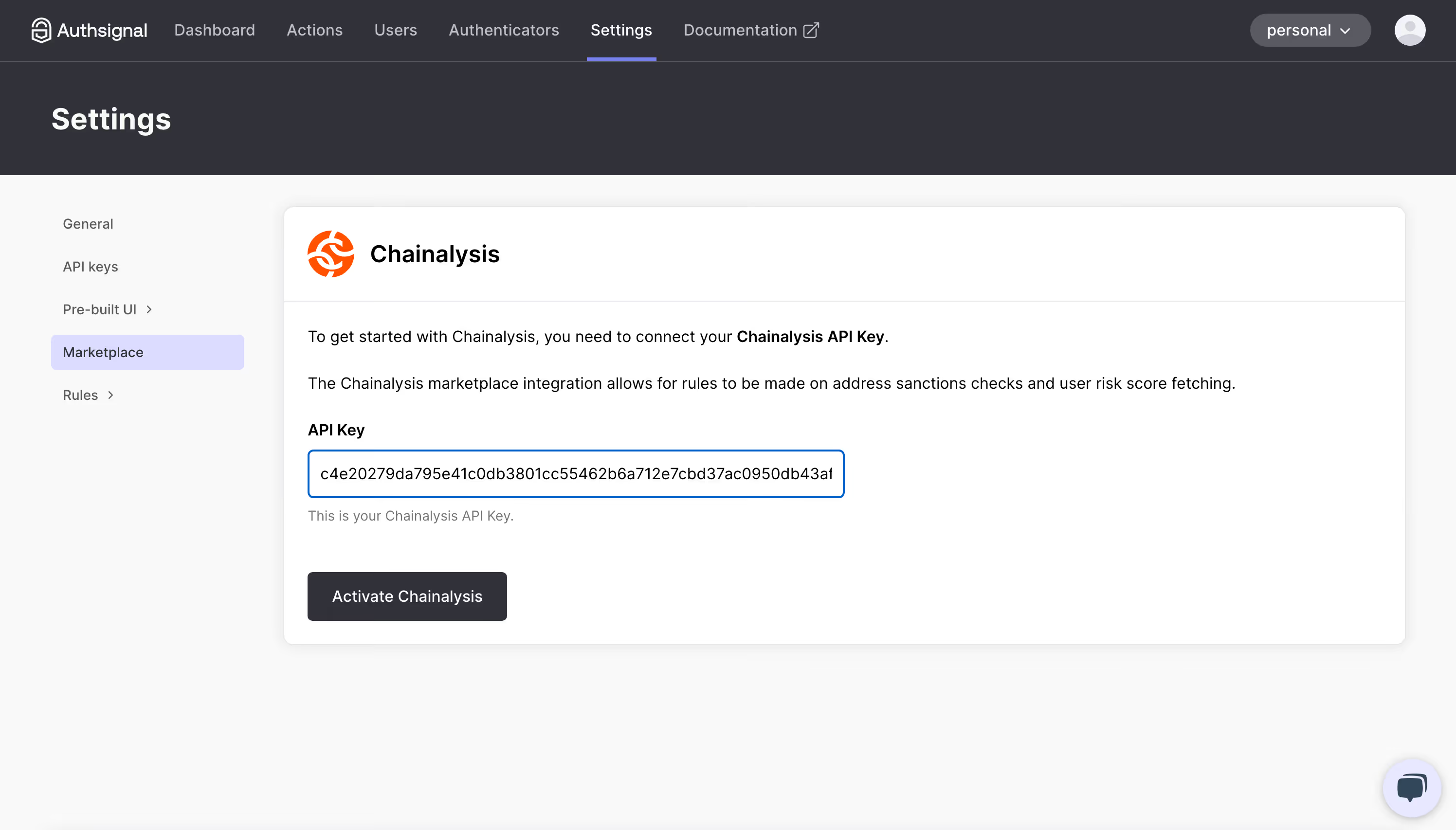
1. Connect Chainalysis

To integrate Chainalysis with Authsignal:

  1. Create an Authsignal account if you don't already have one and login
  2. Navigate to Settings → Marketplace
  3. Choose Chainalysis from Marketplace integrations and click Set up Chainalysis

‍

‍

  1. Enter your Chainalysis API Key in the provided field and activate it.
‍

‍

That's it! The connection is now established and you're ready to start configuring your rules.

‍

2. Set Your Rules

Once connected, you'll need to create rules to determine how your system responds to Chainalysis risk data:

  1. Navigate to the Actions section in your Authsignal Portal
  2. Click Configure a new action
  3. Enter an action name (e.g., "Crypto Withdrawal") and click Configure action

‍

‍

After creating your action, you'll come to the Rules section, where you'll set up specific conditions for when this action should trigger

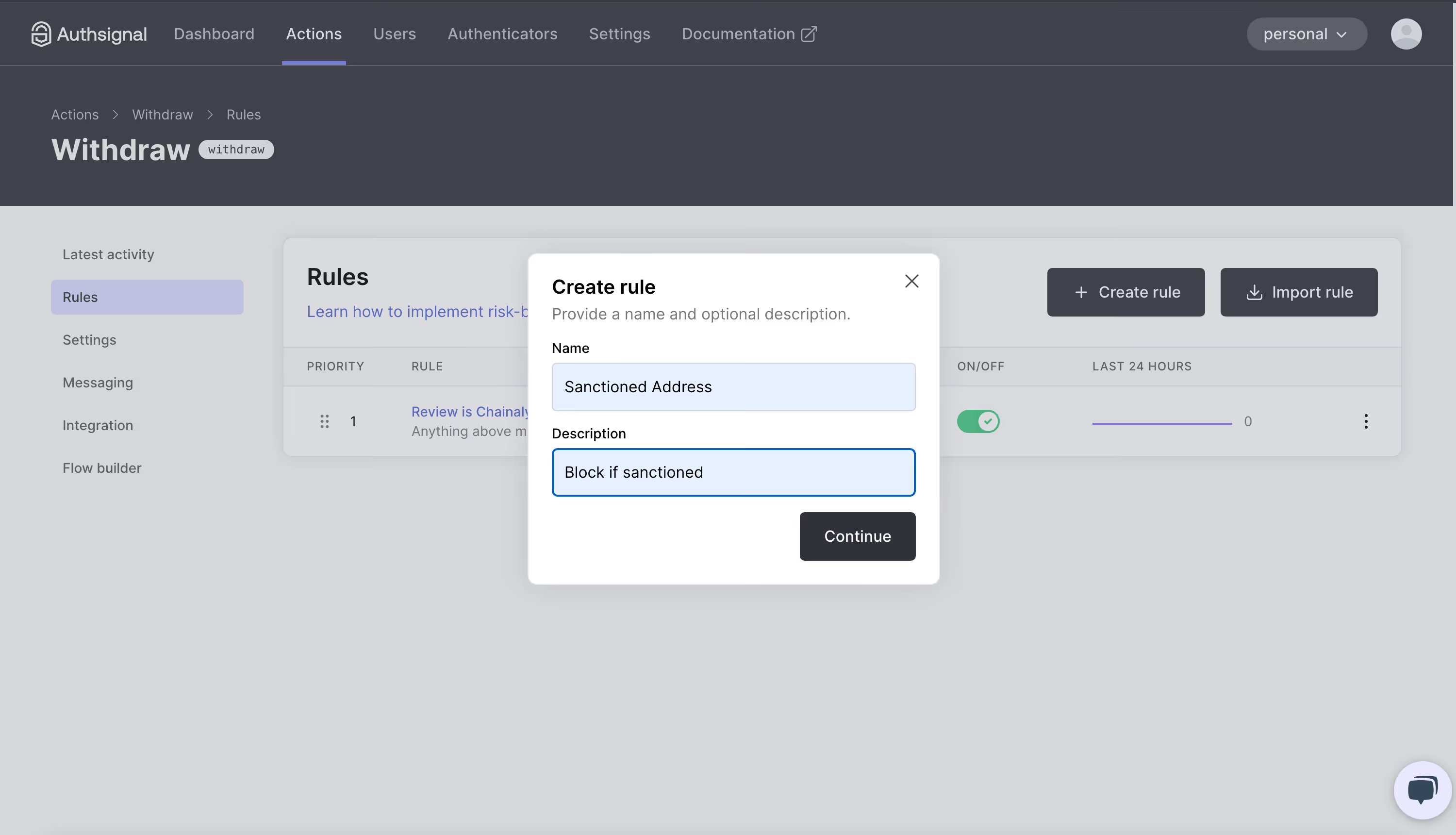
  1. Create a new Rule for the Sanctioned Address.
‍

‍

  1. Now, in the rules page, choose the desired outcome (such as "Allow," "Block", "Challenge", or "Review") and save it. We chose “Block” for this example.

‍

‍

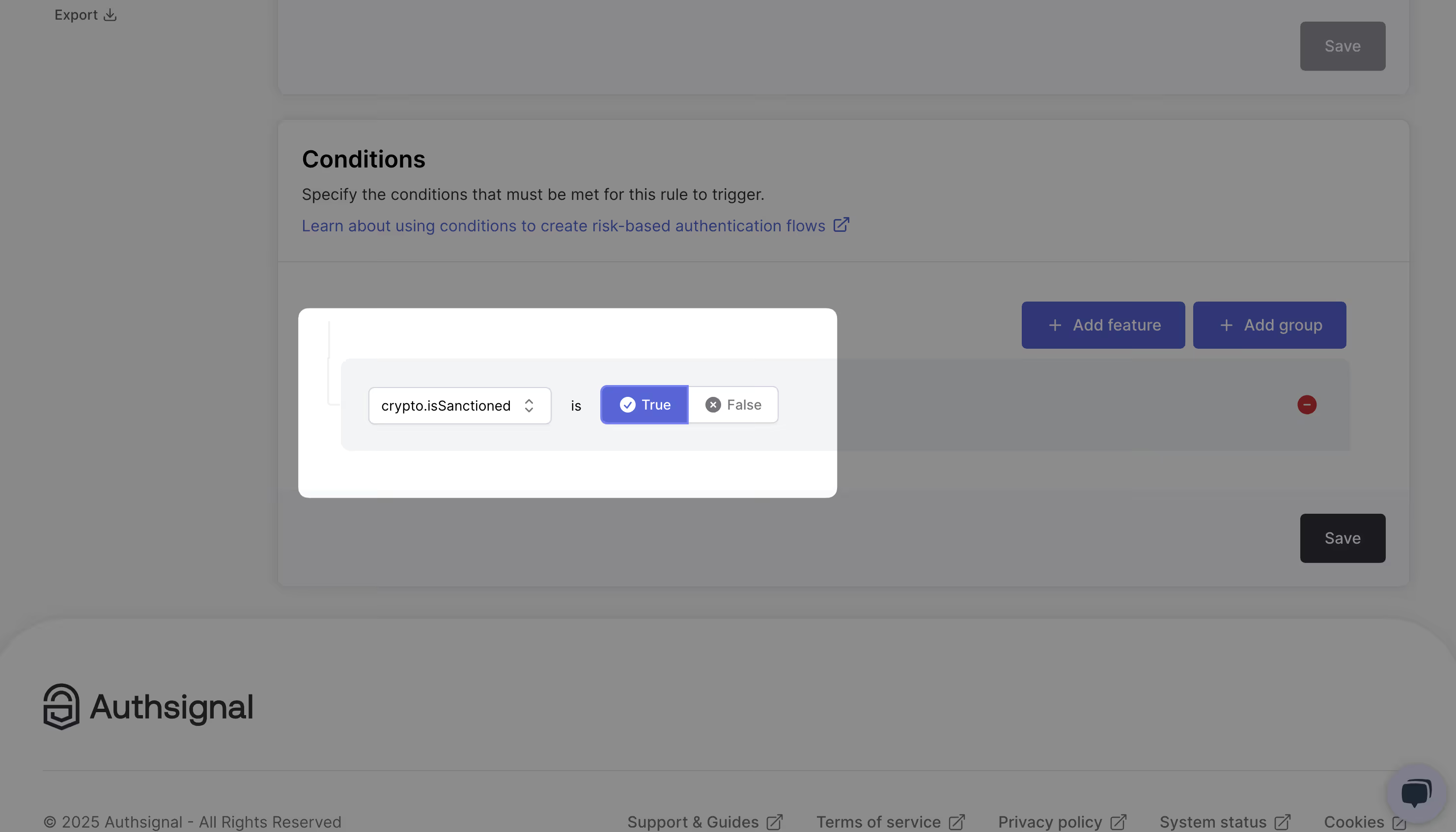
  1. Now, in the conditions section, click Add feature.
  2. Then in the dialog box, choose Crypto category and then choose Address is sanctioned.

‍

‍

  1. Set the condition crypto.isSanctioned to true and save the rule.
‍

‍

  1. You can create additional rules based on Chainalysis risk scores as well. For example: "If User ID Risk Score is SEVERE, require review”

‍

You can combine multiple rules and conditions to create a comprehensive security framework tailored to your risk tolerance and user experience goals.

‍

3. Test It Out

Before deploying your rules to production, you can test them directly in the Authsignal Portal:

  1. Navigate back to your configured action
  2. Scroll down to the testing section
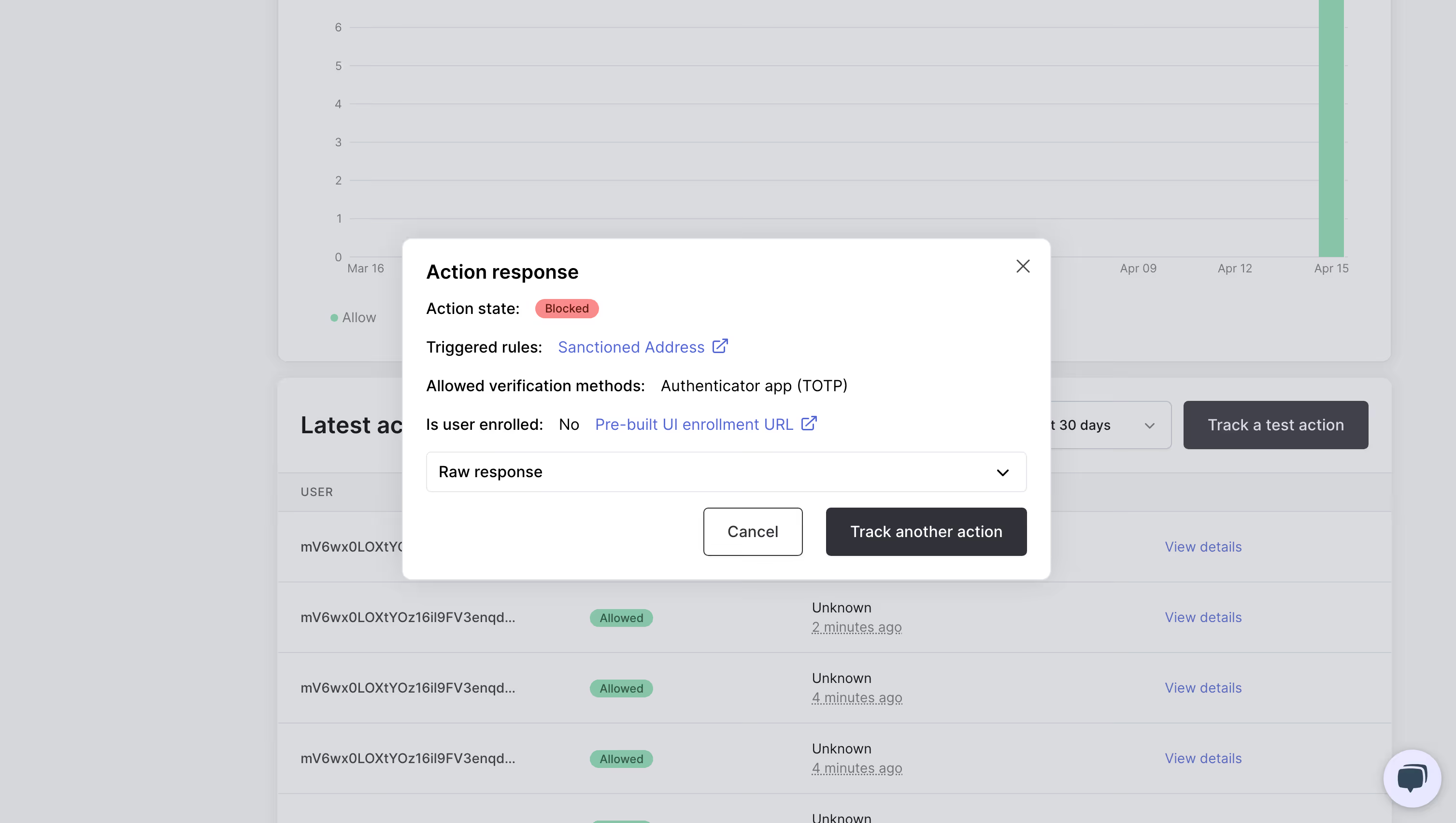
  3. Click Track a test action
  4. Enter test data to simulate a transaction with Chainalysis risk factors

For example, you can use this sample data to test a sanctioned address rule:

{
  "userId": "mV6wx0LOXtYOz16il9FV3enqdMc2",
  "redirectUrl": "https://yourapp.com/callback",
  "crypto": {
    "address": "0x1da5821544e25c636c1417ba96ade4cf6d2f9b5a"
  }
}

‍

‍

You can see that the user with a sanctioned address has been blocked.
‍

You can adjust your rules and test different scenarios until you're confident in your security configuration.

That's it! You've successfully implemented the Chainalysis integration with Authsignal. Your crypto security system is now ready to automatically identify and respond to high-risk transactions based on Chainalysis's blockchain intelligence.

‍

Real-World Example

Here's how this works in practice:

A customer on your exchange tries to withdraw crypto to an external wallet. Behind the scenes:

  1. The withdrawal request triggers an Authsignal check
  2. Authsignal uses your Chainalysis KYT API key to query about the destination wallet
  3. Chainalysis returns risk information about the address based on the User Risk Score.
  4. Based on your rules, Authsignal requests appropriate verification from the user
  5. If it's a legitimate customer, they complete verification and continue. If it's a fraudster, they're stopped

This all happens in seconds, so legitimate customers experience minimal delay.

‍

Wrapping Up

By combining Chainalysis's risk detection with Authsignal's step-up authentication capabilities, you can enhance protection while maintaining a smooth experience for legitimate users.This integration helps you build a platform where legitimate customers experience minimal friction while suspicious transactions receive appropriate scrutiny.

With regulatory requirements around cryptocurrency becoming more stringent, these tools are increasingly essential for sustainable operation.

Ready to protect your platform? Contact our team today to get started.

Question icon
Have a question?
Talk to an expert
NewsletterDemo PasskeysView docs
Chainalysis
Crypto
No-code rules engine

You might also like

Why pension funds are turning to liveness detection for presence verification
Liveness Detection
Identity Verification
Fraud prevention

Why pension funds are turning to liveness detection for presence verification

April 21, 2026
How a global real estate company strengthened MFA with Authsignal
Azure AD B2C
Multi-factor authentication
Passkeys

How a global real estate company strengthened MFA with Authsignal

April 14, 2026
What is Visa VAMP? Thresholds, fees, and how it affects your dispute ratio
Visa VAMP
Chargebacks
Dispute Management

What is Visa VAMP? Thresholds, fees, and how it affects your dispute ratio

April 13, 2026

Secure your customers’ accounts today with Authsignal

Passkey demoCreate free account
Authsignal Purple Logo

Authsignal delivers passwordless and multi-factor authentication as a service. Focused on powering mid-market and enterprise businesses to rapidly deploy optimized good customer flows that enable a flexible and risk-based approach to authentication.

AICPA SOCFido Certified
LinkedInTwitter
Passwordless / multi-factor authentication (MFA)
Pre-built UI (low code)UI components (customizable)Custom UI (flexible)
Why Authsignal?
Drop-in authentication
Risk-based authentication PasskeysBiometric authenticationWhatsApp OTPSMS OTPEmail OTPMagic linksAuthenticator apps (TOTP)Push authenticationPalm biometricsDigital Credential Verification API
Rules and policies engine
User observability
Industries
Financial services
Marketplace
e-Commerce
FinTech
Crypto
View all industries
Teams
Engineers
Use cases
Account takeovers (ATO)
Go passwordless
Call center
SMS cost optimization
Existing apps
View all use cases
Identity providers (IDPs)
Amazon Cognito
Auth0
Azure AD B2C
Custom identity provider
Duende IdentityServer
Keycloak
NextAuth.js
Integrations
ASP.NET
C#
Java
Node.js
Open ID Connect (OIDC)
PHP
Python
React
Ruby
Ruby on Rails
Compare
Twilio Verify vs AuthsignalAuth0 vs AuthsignalAWS Cognito vs Authsignal + AWS Cognito
Resources
BlogDeveloper docsFree Figma mobile passkeys templateFree Figma desktop passkeys templateFree Figma webapp passkeys template
Company
About usWhy AuthsignalGuidesCareersPress releasesPartnersContact us
What is
SMS OTP
Risk Based Authentication
IP Spoofing
Passwordless authentication
Multi-Factor Authentication (MFA)
United States
+1 214 974-4877
Ireland
+353 12 676529
Australia
+61 387 715 810
New Zealand
+64 275 491 983
© 2026 Authsignal - All Rights Reserved
Terms of servicePrivacy policySecuritySystem statusCookies