At some point, MFA stopped being a feature teams added to be thorough and became something they add because the alternative is indefensible. Credential-based attacks remain the dominant path to account takeover, and MFA is still the most reliable mitigation available. But the category has matured in ways that make choosing the right authentication solution genuinely complicated. There are now full-stack identity providers, consumer identity platforms, workforce-focused tools, and a newer category of authentication orchestration platforms that sit on top of existing stacks rather than replacing them. Each solves a different problem, and the wrong choice creates friction, unexpected cost, or security gaps that only surface under pressure.
It is also worth saying plainly: not all MFA is equal. SMS-based OTP is better than nothing, but it is vulnerable to SIM swapping and real-time proxy attacks. TOTP codes can be phished. Passkeys and device biometrics are phishing-resistant by design, because the credential never leaves the device and cannot be intercepted in transit. The gap between "we have MFA" and "we have MFA that actually holds up" is wider than most teams expect.
This guide covers seven authentication solutions across different categories, with honest assessments of where each one works well and where it falls short.
What to look for in an authentication solution
Before comparing specific tools, it helps to agree on what actually matters. These are the criteria worth evaluating.
MFA method flexibility
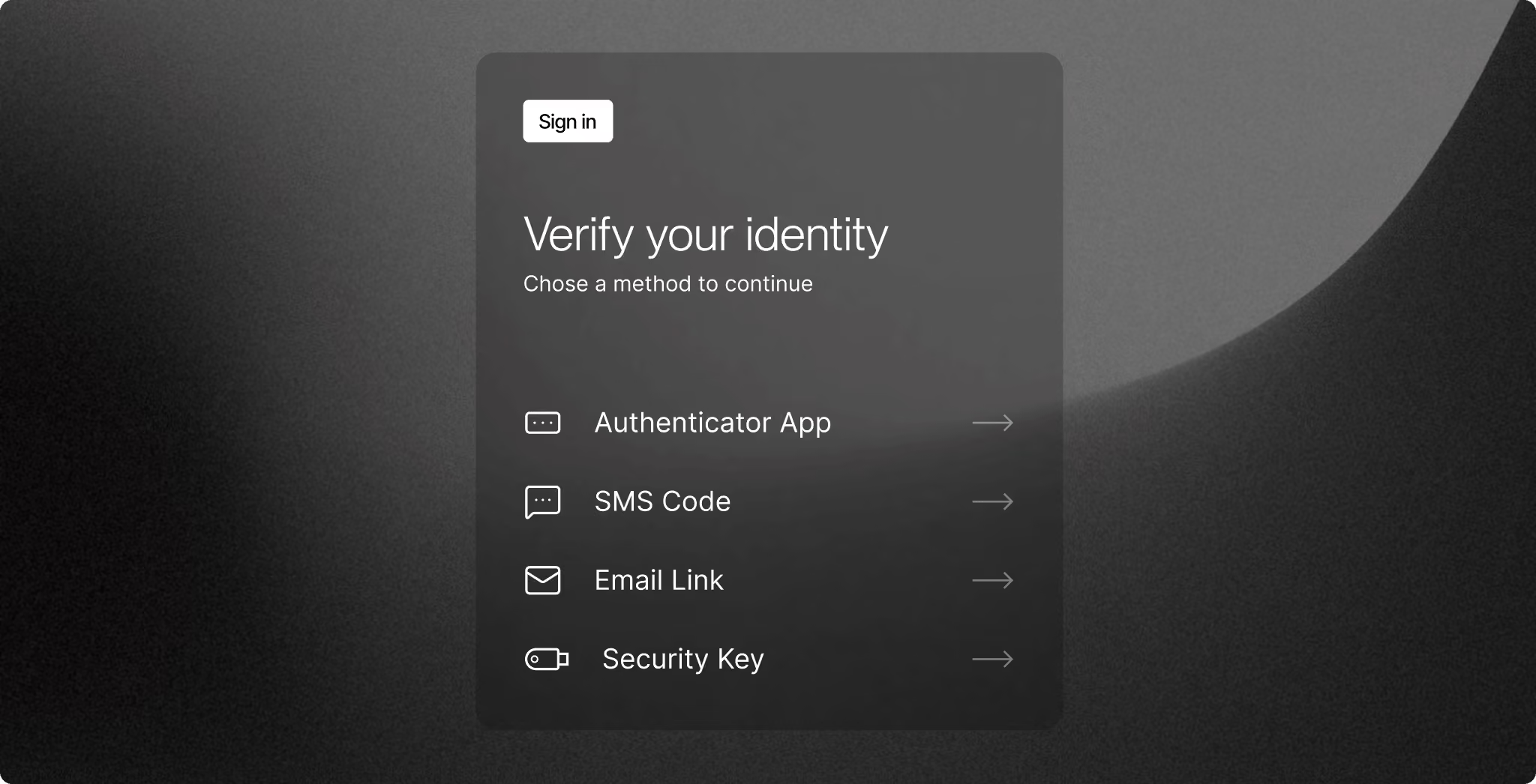
Does the solution support a meaningful range of factors, including TOTP, SMS OTP, passkeys, device biometrics, and email OTP? More importantly, can you offer users a choice, or are you locked to one method? A single-method approach creates a single point of failure and limits your ability to improve the experience over time without re-architecting.
Adaptive and step-up authentication
Can the solution trigger additional verification based on risk signals, such as a new device, an unusual location, or a high-value transaction? Static MFA applies the same friction to every login regardless of context. Contextual authentication reserves that friction for moments where it is actually warranted. The difference matters both for security and for the user experience you are trying to protect.
Developer experience and integration lift
How much engineering time does it take to implement, and how much ongoing maintenance does it generate? Pre-built UI components, clear SDKs, and honest documentation reduce the time between deciding to add MFA and actually having it in production. Solutions that require significant custom work tend to stay on the sprint board longer than anyone planned.
No-code policy management
Can product or security teams adjust authentication rules without a deployment cycle? When a new fraud pattern appears, the gap between identifying the risk and acting on it should be hours, not weeks. A rules engine that non-engineers can operate closes that gap in a practical way.
Compatibility with existing identity stacks
Does the solution require you to replace your current identity provider, or can it layer on top of what you already have? This question matters more than it might seem. A full migration is a significant project with real risk. Solutions that integrate with existing infrastructure let you add capability without that overhead.
Compliance relevance
Authentication is frequently in scope for SOC 2, PCI-DSS, and GDPR. Does the solution support the controls and audit trails those frameworks require? This is rarely the deciding factor, but it is worth confirming before you are in the middle of an audit.
The 7 authentication solutions
The solutions below represent different categories: authentication orchestration platforms, full-stack identity providers, and enterprise workforce tools. Which category is right for your team depends on what you already have and what problem you are actually trying to solve.
1. Authsignal
Category: Authentication orchestration platform
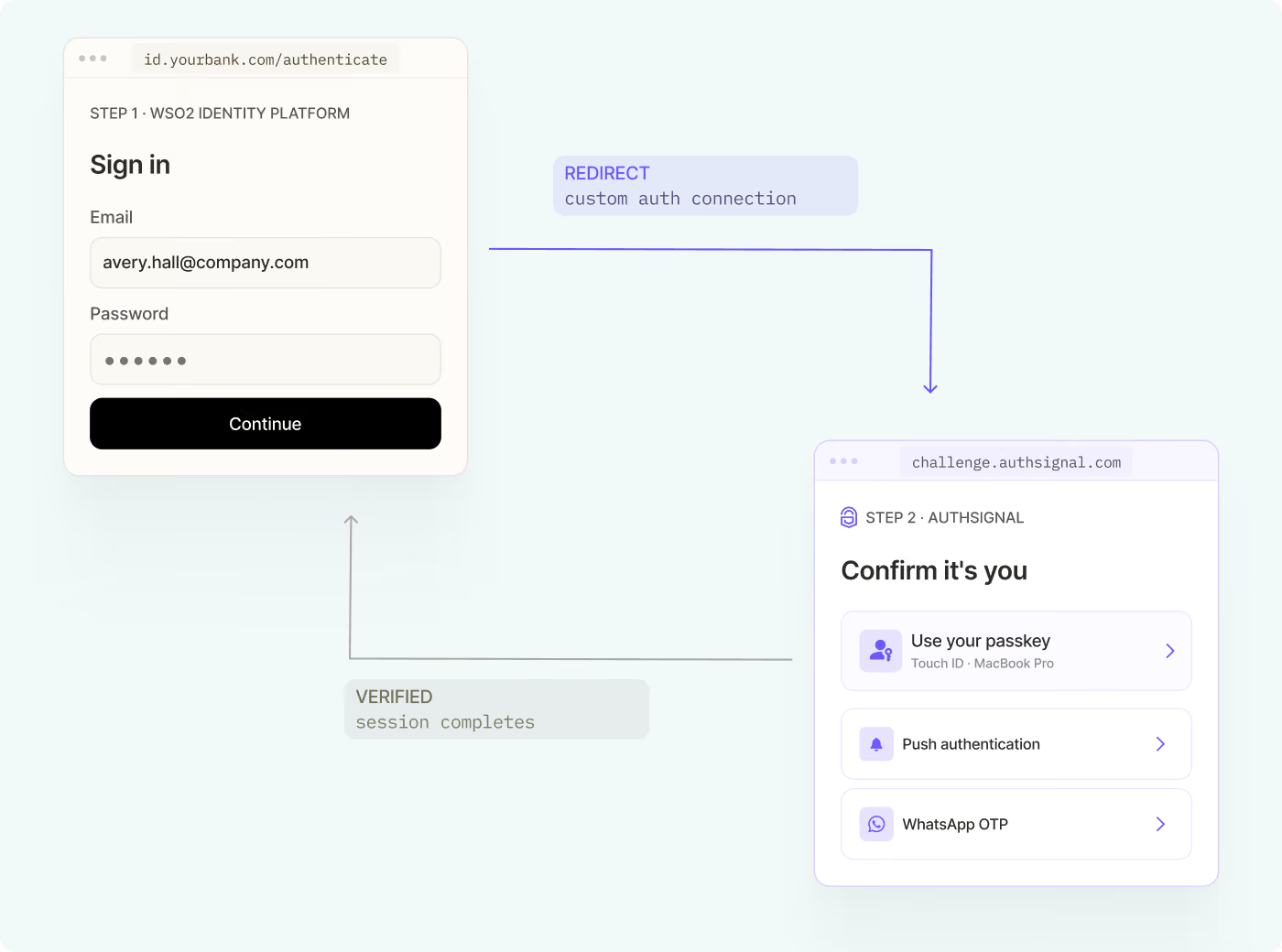
Authsignal is a B2C consumer authentication and orchestration platform built around a single API for authentication and verification flows. It is designed to sit on top of an existing identity stack rather than replace it, which puts it in a meaningfully different category from platforms like Okta or Azure AD. The focus is on giving teams flexible, contextual authentication logic at any point in the user journey, including in-person channel authentication alongside digital flows, without requiring a full platform migration. The target use case is account security for consumer-facing services where user experience and security need to coexist rather than trade off against each other.
- Single API for authentication and verification flows
- Designed to integrate with existing identity infrastructure without replacement
- Supports in-person channel authentication alongside digital flows
- Balances security requirements with a smooth end-user experience
- SSO support for connected apps
- Built for consumer-facing use cases at scale
Limitations:
- Built to complement an existing IDP, not replace it. If you don't have one, you'll need to sort that first.
Best for: Teams that already have an IDP and need flexible, contextual authentication logic, step-up challenges, and fraud prevention without a full platform migration.
2. Okta
Category: Enterprise workforce identity provider
Okta is one of the more established names in enterprise identity. Its core strength is workforce identity management: giving large organizations control over who can access what, across a wide range of enterprise applications. It supports MFA, adaptive access policies, and a broad integration catalog. For teams managing employee access at scale, it is a well-understood choice with a long track record.
- Broad MFA method support including TOTP, push notifications, and hardware keys
- Adaptive access policies based on device, location, and risk signals
- Large integration library covering a wide range of enterprise applications
- Strong compliance and audit tooling
Limitations:
- Pricing is high, particularly for customer-facing (CIAM) deployments at scale
- Configuration complexity is significant; implementation typically requires dedicated identity engineers
- Consumer identity use cases can feel like a secondary concern relative to workforce identity, because they largely are
Best for: Large enterprises managing workforce identity at scale with dedicated IT and identity teams.
- Microsoft Entra ID (formerly Azure AD)
Category: Enterprise cloud identity provider
Microsoft Entra ID is the identity backbone for organizations already running Microsoft 365 and Azure. It provides MFA through the Microsoft Authenticator app, conditional access policies, and deep integration with the Microsoft ecosystem. If your organization lives in Microsoft's stack, Entra ID is often already doing most of the work.
- Native integration with Microsoft 365, Azure, and Windows environments
- Conditional access policies that trigger MFA based on risk signals
- Microsoft Authenticator app with push notifications and passwordless options
- Strong compliance tooling relevant to regulated industries
Limitations:
- Value drops significantly outside the Microsoft ecosystem
- Conditional access at scale requires Azure AD Premium licensing, which adds cost
- Consumer-facing deployments via Azure AD B2C are technically capable but involve significant configuration overhead
- Less flexible for non-Microsoft identity stacks
Best for: Organizations deeply invested in the Microsoft ecosystem, managing employee identity.
4. Auth0 (by Okta)
Category: Developer-focused identity provider
Auth0 is a developer-friendly identity platform that handles authentication, authorization, and user management. It supports a wide range of MFA methods and is commonly chosen for greenfield projects where teams want to avoid building identity infrastructure from scratch. The documentation is thorough, the SDK coverage is broad, and getting something working quickly is genuinely straightforward.
- Broad MFA method support: TOTP, SMS, push, WebAuthn/passkeys
- Extensive SDK and documentation support across major languages and frameworks
- Customizable login flows through Actions (serverless functions)
- Good fit for both B2B SaaS and consumer app use cases
Limitations:
- Pricing scales steeply with monthly active users, which can be a surprise at growth stage
- Customization beyond standard flows often requires writing and maintaining custom code
- Since the Okta acquisition, some teams report slower product velocity and support responsiveness
- Not designed to layer on top of an existing IDP; it typically becomes your IDP
Best for: Development teams starting a new product who want a full-featured identity provider with strong developer tooling.
5. Ping Identity
Category: Enterprise identity and access management
Ping Identity is an enterprise-grade IAM platform covering workforce and customer identity. It supports a wide range of authentication methods and is commonly found in large financial services, healthcare, and government deployments. The breadth of capability is real, but so is the implementation weight that comes with it.
- Comprehensive MFA support including hardware tokens, biometrics, and mobile push
- Strong adaptive authentication and risk-based access controls
- Designed for high-compliance regulated environments
- Supports on-premises, cloud, and hybrid deployments
Limitations:
- Implementation complexity is high; typically requires specialist consultants or a dedicated internal team
- Not well suited for smaller teams or companies without significant identity engineering resources
- UI and developer experience can feel dated compared to newer platforms
- Cost is enterprise-tier and not publicly listed
Best for: Large enterprises in regulated industries with complex, multi-environment identity requirements and dedicated IAM teams.
6. Duo Security (by Cisco)
Category: MFA and zero trust access
Duo is a focused MFA and device trust solution, now part of Cisco's security portfolio. It earns its place by being genuinely easy to deploy on top of existing infrastructure without replacing the underlying identity provider. For workforce access and VPN security, it has a long track record.
- Strong MFA across push notifications, TOTP, SMS, and hardware keys
- Device trust and health checks as part of the authentication decision
- Easy to deploy on top of existing infrastructure
- Good fit for workforce access security and zero trust network access
Limitations:
- Primarily workforce-focused; less suited for consumer-facing authentication at scale
- Limited orchestration capabilities for complex user journey logic
- Cisco acquisition has shifted product direction toward broader network security bundling
- Less flexibility for customizing the end-user experience in B2C contexts
Best for: IT and security teams adding MFA to workforce access, VPNs, and internal applications.
7. TOTP / open standards (self-implemented)
Category: Protocol-level MFA (no vendor)
Some teams implement MFA directly using open standards like TOTP (RFC 6238) or FIDO2/WebAuthn, relying on open-source libraries rather than a managed vendor. This gives maximum control. It also shifts every maintenance decision, security patch, and recovery flow entirely to your engineering team. That trade-off is worth it for some teams, and genuinely not worth it for most.
- No vendor dependency or per-user licensing costs
- Full control over UX, storage, and flow logic
- FIDO2/WebAuthn provides phishing-resistant authentication by design
- Can be tailored precisely to product requirements
Limitations:
- Significant ongoing engineering investment: implementation, maintenance, security patching, and recovery flows all fall to your team
- Easy to get wrong; subtle implementation errors in cryptographic flows can introduce vulnerabilities
- No built-in risk signals, adaptive logic, or fraud detection
- Account recovery and factor management add substantial complexity
Best for: Teams with strong security engineering resources building highly customized authentication systems where vendor lock-in is a hard constraint.
Comparison at a glance
The table below summarizes the key dimensions across all seven solutions. Use it as a starting point, not a final answer.
How to choose the right authentication solution
The decision usually comes down to where you are in your product lifecycle and what you already have in place. Three scenarios cover most situations.
If you already have an identity provider and need to add MFA, step-up authentication, or fraud prevention without replacing your existing stack, an orchestration layer is the most practical path. Authsignal is built specifically for this pattern. It connects to your existing IDP through a single API and is designed for consumer-facing use cases where the user experience and security need to hold equal weight. You get the authentication logic you need without a rip-and-replace project landing on your sprint board.
If you are building a new product from scratch and need a full identity layer, a developer-focused IDP like Auth0 is a reasonable starting point. The tooling is mature, the documentation is thorough, and you can move quickly. Just go in clear-eyed about how pricing scales as your user base grows.
If you are managing enterprise workforce identity at scale, Okta, Microsoft Entra ID, or Ping Identity are the natural candidates. Which one depends largely on your existing ecosystem. Microsoft shops will find Entra ID fits without much friction. Everyone else should weigh the implementation cost honestly before committing.
Most teams are in the first scenario more often than they expect. They already have an identity layer. What they lack is the orchestration logic to make authentication contextual, flexible, and fraud-aware without rebuilding from scratch. That is a solvable problem, and it does not require starting over.
Conclusion
The instinct when evaluating authentication solutions is to look for the longest feature list. That instinct is understandable and usually leads you somewhere unhelpful. The more useful question is which solution fits the architecture you already have, the team you actually have, and the users you are trying to protect.
For teams with an existing identity provider, adding an orchestration layer is often faster, less disruptive, and more adaptable than migrating to a new IDP. You keep what is working. You add what is missing. Authsignal is built for exactly this pattern: a B2C authentication and orchestration platform that integrates with your existing stack through a single API, without requiring you to throw out what came before.
The path of least resistance should be the secure one.